Kerbside Canon: The Britons Ranking Bollards Like Football Teams
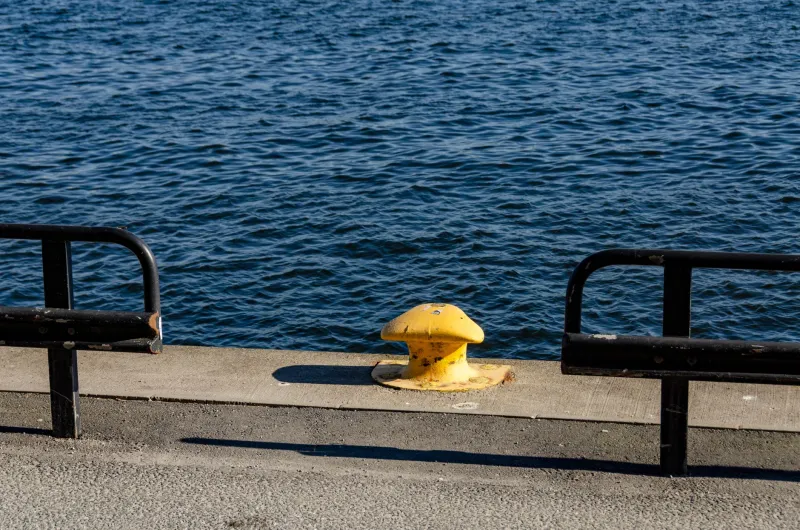
There is a photograph, taken at dusk in a market town somewhere in the Midlands, of a cast-iron bollard with a chipped shoulder and a flake of cream paint curling like a crisp. It has 47 likes. In the comments, two people are arguing about whether it is a genuine Victorian original or a 1990s replica. This is not irony. This is the bollard beat.
Across the UK, a loose network of amateur bollard spotters is doing something quietly strange: photographing, cataloguing and ranking the street furniture most of us steer past on the way to the bus stop. They have spreadsheets. They have preferred foundries. They have a monthly award, the Bollard of the Month, which sounds like a joke until you see the shortlist and realise the judging is more rigorous than most pub quizzes.
A very British kind of fan account
The scene is not one club with a membership card. It is more like a cluster of accounts, group chats and local threads, stitched together by a shared appreciation for kerbside iron. Some posters are completists, logging every bollard on a single high street. Others are aesthetes, chasing patina, shape and the particular melancholy of a post that has been repainted so many times it looks like it is wearing lipstick.
The posts are simple: a photo, a location, a short note. But the notes can be forensic. 'Looks like Stanton, interwar, but the collar is wrong,' one will say. Another will reply with a map pin and a theory about a council contract in the 1970s. The tone is friendly, but there is a flicker of steel underneath. Bollard people care.
The scoring system is not a joke
Most accounts have a rough rubric. Rarity matters. So does setting: a bollard outside a cathedral close will score differently from one guarding a retail park. Condition is debated. Some voters reward original paint; others prefer the battered honesty of a post that has clearly been reversed into by a delivery van. Placement counts too. A bollard that is doing an actual job, separating pavement from loading bay, earns respect. A bollard that is purely decorative is not dismissed, but it is discussed.
Then there is the plastic question. The humble plastic cylinder is the Marmite of the scene. Purists see it as the end of the craft, a hollow imposter. Pragmatists point out that it is cheap, visible and does the job. The argument resurfaces every few weeks, usually under a photo of a perfectly ordinary bollard in a supermarket car park. Nobody wins. Everybody posts.
Regional rivalries and the monthly vote
The monthly award is where the scene gets its edge. Shortlists are assembled from nominations, then argued over in comments and group chats. There is tactical voting. There are regional blocs. Coastal towns have a strong record, partly because sea air gives metal a character that inland voters can only dream of. Cathedral cities do well on architecture. Market towns are the wildcards, often fielding a scuffed but beloved post that has stood outside the same bakery for decades.
The prize is modest: a digital rosette, a badge, perhaps a printed certificate posted to the winner. The real prize is the argument. Every month, someone will claim a bollard is not a bollard if it is technically a bollard-shaped litter bin. Someone else will accuse the shortlist of London bias. A third person will post a photo of a bollard so plain, so grey, so utterly unremarkable that it becomes a kind of koan. This is the culture.
Why bollards, though?
Because they are everywhere, and almost nobody looks. Bollards are local history at knee height. They carry the fingerprints of foundries, council budgets, pedestrianisation schemes and decades of repainting. They are also low-stakes. In a feed full of bad news, a bollard does not want anything from you. It is not selling a course. It is not asking you to like and subscribe. It is just standing there, doing its small job.
That makes the hobby oddly restful. You can learn to read a street by its posts: the ornate Victorian survivors, the utilitarian post-war cylinders, the modern sleeves and reflectors. You can start to notice the difference between a bollard that has been loved and one that has been abandoned. You can, if you are not careful, develop opinions about finials.
The rules of the kerb
The better accounts are careful. They do not trespass. They do not block pavements to get the shot. They blur number plates and avoid geotagging sensitive sites. The etiquette is simple: take only photos, leave only mild pedantry. It is a hobby that fits into a lunch break, a dog walk, a wait for a train. You do not need equipment. You need eyes and a willingness to look slightly odd while crouching near a kerb.
Sirvez has spent a week lurking in these threads, and the overwhelming impression is not of eccentricity for its own sake. It is of people making a small, shared world out of the bits of Britain that usually go unremarked. The bollard does not care about the award. That is precisely why the award is funny, and why the people giving it are worth watching.
A quiet antidote to the algorithm
The bollard beat will not go viral in the way a celebrity row does. It does not need to. Its pleasures are slower: a good photo, a sharp observation, a monthly argument that ends with somebody posting a picture of a postbox instead. In a culture that rewards speed and scale, there is something stubbornly lovely about a group of Britons ranking street furniture like football teams.
So next time you pass a bollard, give it a second look. Check the shoulder. Check the paint. Check whether it is actually a bollard or a bollard-shaped litter bin. Somewhere online, someone is already arguing about it. They would love your vote.