Laminated and Lost: The Quiet Race to Archive Britain's Village Noticeboards
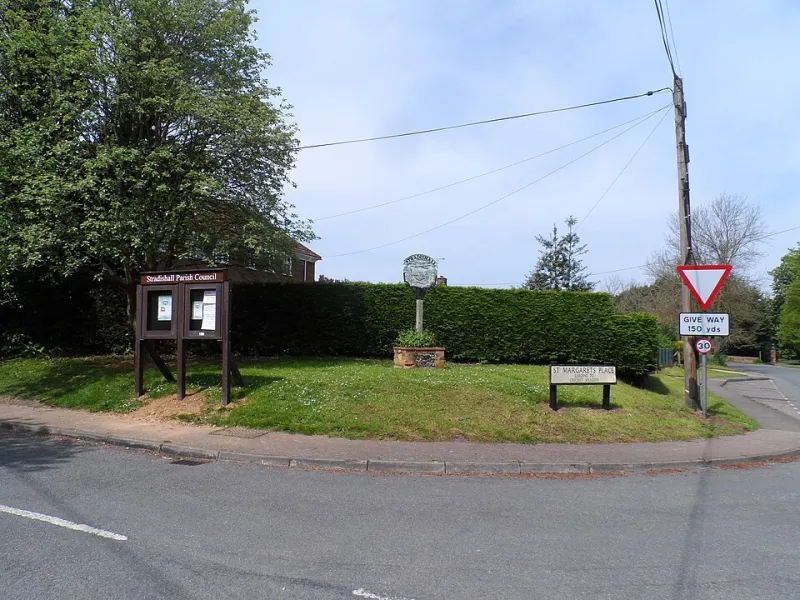
Photo: Bikeboy , CC BY-SA 2.0, via Wikimedia Commons
On a wet Tuesday in Somerset, a woman is photographing a noticeboard in a church porch. She is not making art. She is making a record. The board is crowded: a missing cat, a yoga class, a parish council agenda, a card for a handyman who does not answer his phone. She takes four shots — one wide, one close, one of the tear-off tabs, one of the date in the corner — and then she moves on. By Friday, the yoga class notice will be gone. The cat will still be missing. The board will have changed.
This is the quiet work of Britain's noticeboard archivists: a loose, unglamorous network of local historians, retired librarians, and people who simply cannot walk past a pinned piece of paper without wondering what it says. They photograph village noticeboards before the rain, the next pin, or the parish clerk's clear-out takes them. They upload the images to local history groups, Flickr albums, private Discord servers, and sometimes to the Internet Archive. They are not trying to preserve everything. They are trying to preserve the small print.
The Board as a Living Document
A noticeboard is a content management system with no undo button. It has a front page, a hierarchy, and a moderation policy that is usually 'ask at the post office'. It also has a lifespan. A5 notices fade. Blue tack fails. Laminated cards curl at the corners. The rain gets in. The next notice goes up on top of the last one, and the last one becomes a layer, like sediment.
'People think a noticeboard is static,' says Ruth, 67, who has been photographing boards in Norfolk for six years. 'It is not. It changes every week. The missing cat moves. The yoga class changes its time. The parish council minutes appear and then disappear. If you do not photograph it, it is gone.' Ruth started with her own village board. Then she started taking pictures of boards in neighbouring villages. Then she bought a small scanner and a laminator, which she describes as 'the opposite of the internet'.
Missing Cat, Yoga Class, Parish Minutes
The archive is not a grand historical record. It is a record of small things. A missing cat notice from 2019 is now, in the archive, a memorial. A yoga class flyer from 2021 shows a phone number that no longer works. A parish council agenda includes a handwritten note about a hedge. These are not the things that make it into official histories. They are the things that make a place work.
'You can learn more about a village from its noticeboard than from its Wikipedia page,' says Tom, 41, a web developer in Bristol who runs a small online archive of boards in the South West. 'The Wikipedia page tells you the population and the church. The noticeboard tells you who is lonely, who is selling a bike, who is running a coffee morning, and which pub has a quiz on Thursday.' Tom's archive is deliberately low-tech. No algorithm. No comments. Just a grid of photographs and a search box that mostly works.
The Ethics of the Pin
The archivists have rules. They blur phone numbers. They avoid photographing notices that look private. They do not archive things that could embarrass someone. 'You have to be careful,' says Ruth. 'A noticeboard is a public space, but it is also a small one. People put their numbers on there because they trust the village.'
The ethics are not always obvious. A missing cat notice is sad, but it is also a public appeal. A parish council agenda is public by law. A handyman's card is an advertisement. A handwritten note about a lost glove is something else. The archivists tend to err on the side of caution. They photograph the board, not the person who pinned the notice. They record the format as much as the content.
What the Archive Actually Shows
What emerges from the archive is not a story of decline. It is a story of maintenance. The boards are full of people trying to organise things: a choir, a food bank, a road closure, a jumble sale. The grammar is often wonky. The fonts are often Comic Sans. The tear-off tabs are often gone. But the effort is visible. Someone stood there with a stapler. Someone hoped someone else would read it.
'There is a whole layer of local life that happens on a piece of A4,' says Tom. 'It is not on social media. It is not in the newspaper. It is on a board outside the village hall, and it is held on with drawing pins.' The archive is not comprehensive. It is a sample. But it is a sample of something real.
The Next Notice
The woman in the Somerset porch finishes her photographs and checks the date. She has a folder for this village, and a folder for the next one. The rain is getting heavier. The noticeboard is under a small roof, but the corners are already damp. She takes one last shot of the tear-off tabs, which are mostly gone. Then she walks back to her car.
By Friday, the yoga class notice will be gone. The cat will still be missing. The board will have changed. The photograph will be the only record that it was ever there. It is not much. It is enough.