Page Not Found, Warmly Received: The British Webmasters Turning Dead Ends Into Doorsteps

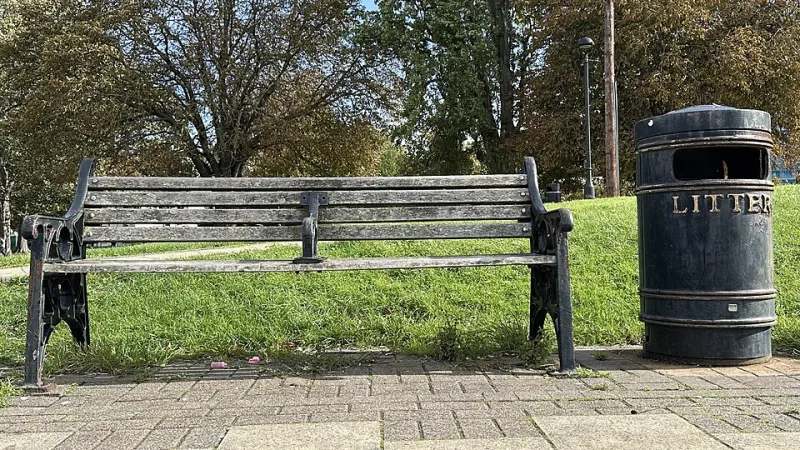
Photo: Jens Kreuter jenskreuter, CC0, via Wikimedia Commons
It is 11.42pm and you are looking for the summer timetable for a village hall somewhere in Shropshire. You click. The page is not there. And instead of the usual grey void, a man called Dave would like to apologise for the inconvenience, in verse, in four lines, one of which does not quite scan.
You have found a British 404 page. Congratulations. You are now more intimate with this website than its own homepage will ever let you be.
The one page nobody briefed marketing on
There is a strange economics to the error page. Every other pixel of a modern website has been through a meeting. The homepage has a strategy. The About Us page has a photo of six people in a meeting room, three of whom have since left. The contact form has been focus-grouped until it squeaks.
And then there is the 404. The 404 is where the budget ran out.
This is precisely why it is the most human page on the site. Nobody optimises a dead end. Nobody A/B tests the apology. There is no conversion funnel through 'the page you requested could not be found'. Which means the person who built it was not building for a brand guideline or a quarterly target. They were building for you, a stranger, who has arrived by accident and is about to leave.
That is a rare thing in 2026. Somewhere along the way, the British internet became a series of identical shopfronts with the same cookie banner and the same little chat bubble in the corner offering to help. The 404 is the back gate. It is where you can still tell who actually runs the place.
Sorry, love: in defence of the apology poem
There is a whole micro-genre of British error page that opens with an apology and then, for reasons best known to itself, escalates into verse.
A model railway club in West Yorkshire once greeted lost visitors with a couplet about signals and points. A chip shop in Fife went with a limerick, which is the correct form for a chip shop. One parish council site we fell down a hole into offered a short, genuinely moving stanza about the link having 'gone on ahead', which is the sort of thing that stays with you longer than it should.
None of these are good poems, and that is not the point. They are the online equivalent of a handwritten note taped to a gate saying the hall is closed for rewiring. Someone stopped what they were doing, thought about the person who would get lost, and wrote them a little something. In an age of automated everything, that is almost unbearably polite.
The library that put jokes in the margins
Libraries have the hardest time of it online. Their catalogues are enormous, their links are ancient, and their content moves buildings every few years. Broken links are not an exception on a library website; they are the weather.
Which is why some library services have quietly given up on pretending otherwise and started having fun with it. One northern authority's error page notes that the item you wanted has been 'withdrawn from circulation, unlike your library card, which is very much still valid'. Another hides a small running joke across its holding pages, so that a visitor chasing a dead link ends up reading three increasingly silly sentences before being pointed back to the search box.
It is a very British instinct: when something has gone wrong, do not make a fuss, make a slightly self-deprecating remark, and move the person along with their dignity intact.
A rough taxonomy of the British dead end
Spend long enough clicking links that no longer work and patterns emerge. Roughly, they break down like this.
The Shrug. Plain Helvetica, two lines, no apology. 'This page does not exist.' Brutal, honest, oddly refreshing. Usually found on the sites of people who are extremely good at their jobs and have no interest in being liked.
The Over-Apologiser. Six paragraphs blaming 'a recent website update', followed by an email address that also bounces. Warm, but chaotic.
The Poem. Rare. Precious. Always slightly worse than the author believes.
The Easter Egg. A hidden game, an animated badger, a joke only visible if you know to hover over the full stop. Built by someone who was left unsupervised for an afternoon and enjoyed it enormously.
The Sorry Redirect. 'You have landed in the wrong place. We have moved you along. Mind the gap.' You are being helped, and gently told off, at the same time.
There is also, for the true enthusiast, the distinction between a 404 and a 410. A 404 means the page cannot be found. A 410 means it is gone, deliberately, for good. A small number of British sites use the 410 out of what can only be described as principle, and they deserve our respect.
The irony of being missed
The internet is built on being found. Entire industries exist to make sure your page turns up when someone types the right words at two in the morning. Search rankings, backlinks, metadata, the endless pursuit of being visible.
And yet the one page nobody is meant to see is the one where people are most themselves. No analytics target hangs over it. Nobody is checking its bounce rate. It is the only unmonetisable room in the house, which is exactly why somebody bothered to put a picture up in it.
There is something quietly lovely in that. A dead end, in Britain at least, still tends to have a person standing at it.
How to read a broken link
So next time a link dies under your finger and you land on something that was clearly written by a human being at a kitchen table, do not click away immediately. Read it. Somebody made that for you, and they had no idea you were coming. They did not know your name or what you wanted or why the village hall timetable mattered at midnight.
They just knew that sooner or later, someone would take a wrong turn. And they wanted that person to be met properly.