The Quiet Genius of Britain’s Single-Task Websites
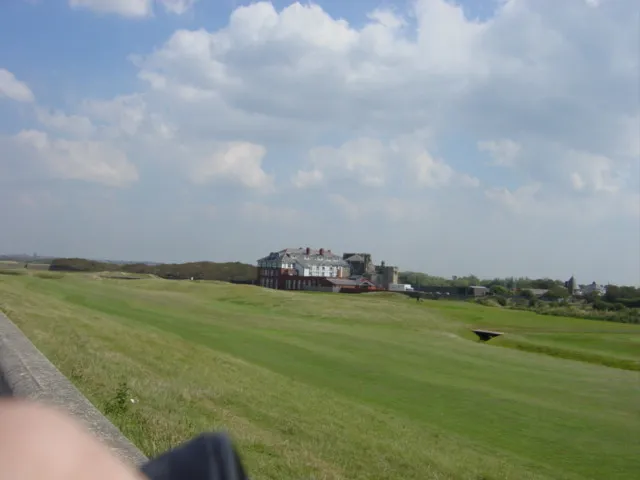
Photo: Joseph554, CC0, via Wikimedia Commons
There is a website that answers one question: is the tide in at a beach near St Ives? No app, no login, no newsletter pop-up. Just a word, a timestamp and a photograph of the sea that looks suspiciously like it was taken on a phone. It is, by almost every measure of modern digital strategy, a terrible website. It is also completely delightful.
The maker is Lowenna, a ceramicist who updates the page when she walks her dog. She built it because visitors kept asking the same question and she got tired of answering. The site has no advertising, no analytics dashboard she checks, and no plans to become a platform. It does one job. That, it turns out, is the whole point.
The Tide, the Bus and the Bin
Lowenna’s tide page is part of a quiet boom in Britain’s single-task websites. In Birmingham, Ade runs a one-page memorial to a withdrawn bus route — he calls it ‘a bench for people who used to wait for the 29A’. There is a scanned timetable, a handful of photographs, and a guestbook that fills up slowly with messages from people who remember the driver’s name. In Sheffield, a page called IsItBinDayForMyStreet does exactly what it says on the tin, for one street only. It has been running for years and has never needed a redesign.
These are not startups. They are not side hustles. They are closer to public notices, hobby projects and small acts of civic maintenance. Their makers tend not to call themselves founders. They call themselves ‘the person who updates it’.
Why One Job Is Enough
A single-purpose website is a strange thing to encounter in 2026. The mainstream internet is now a series of enormous rooms designed to keep you in them: feeds that refresh, recommendation engines that nudge, summaries that promise to save you time while quietly eating the afternoon. Against that, a page that tells you whether the tide is in feels almost radical. It asks nothing of you. It has no opinion about your attention span. It simply answers its one question and lets you go.
That restraint is part of the appeal. A site with one job cannot be gamed by search engine optimisation in the usual way, because there is nothing to rank for beyond the thing itself. It gets found by word of mouth, by a link in a group chat, by someone saying ‘there’s a website for that, actually’. The makers I spoke to were unanimous on one point: the constraint is the charm. A page that does one thing is easier to trust than a page that does everything.
The Anti-Feed
At Sirvez, we tend to treat the web like a car boot sale: the best finds are rarely the loudest stalls. Britain’s single-task sites fit that logic perfectly. They are the digital equivalent of a hand-painted sign at the end of a lane, pointing to eggs or firewood. You do not need them to be scalable. You need them to be accurate.
There is also a practical pleasure in a site that loads instantly and looks like it was made by a human. One page, one job, one person checking that the bin collection has not changed. In a year when so much of the internet feels assembled by committee, that is weirdly moving. The tide page does not need a roadmap. It needs the tide.
A Small Web With a Big Personality
The people behind these sites are not nostalgic for the early web in any fussy way. They are not trying to rebuild Geocities. They are just making small tools for small audiences, and finding that small audiences are often the most loyal. A bus route memorial gets a handful of visitors a week. A tide checker gets more in summer. Neither is trying to grow.
That may be the most British thing about them: a refusal to make a fuss, combined with a stubborn commitment to doing the thing properly. They are less monument than utility, less brand than neighbour. And in 2026, when the biggest websites are increasingly indistinguishable from one another, a page that does exactly one thing starts to look like a personality.
The charm is the constraint. Long may it stay unoptimised.