The Things We Leave Between Chapters: Britain’s Returned Library Books Are Keeping Our Secrets
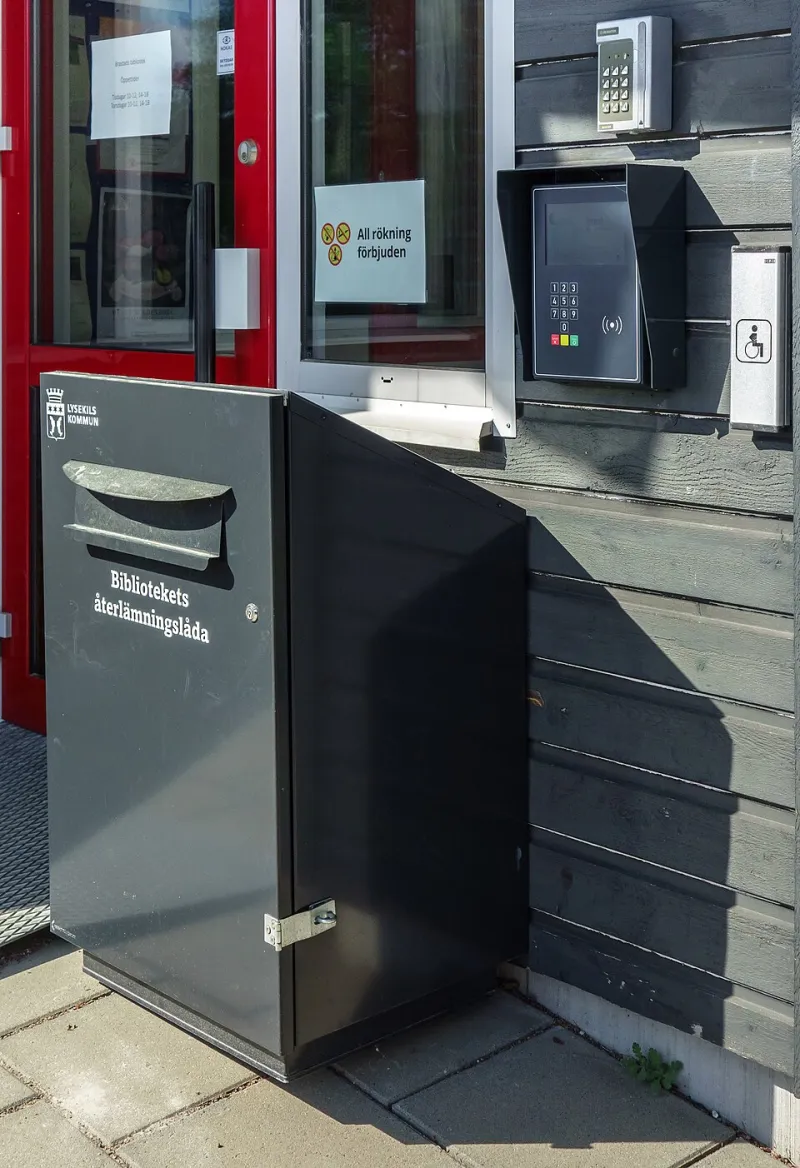
Photo: W.carter, CC BY-SA 4.0, via Wikimedia Commons
There is a particular sound a library book makes when it has been somewhere. A soft, papery shrug as it lands on the returns trolley. Then the flip. Staff do it without thinking: open the cover, run a thumb through the pages, shake it gently. Out falls a life.
Not a dramatic life, usually. A receipt for a single bag of frozen peas. A dentist appointment card for a Tuesday that has already happened. A pressed pansy, flat as a communion wafer. A handwritten list: 'milk, bin bags, ring Mum, don't forget the casserole.' The casserole is underlined twice. You never find out why.
This is the quiet afterlife of the British library book. Not the story printed inside it, but the debris of the person who carried it around. And in branches from Leeds to Plymouth, librarians are the reluctant curators of it all.
The returns trolley as confessional
'You develop a sixth sense,' says Nadia, a branch manager in Leeds. 'There's a difference between a bookmark and a cry for help. A train ticket is just a train ticket. But a train ticket with a phone number on the back, and the words "I'm sorry, I panicked"? That's not a bookmark. That's a message in a bottle with a library stamp on it.'
Nadia has worked in libraries for eleven years. She keeps a small shoebox under the counter labelled, with typical librarian dryness, 'Ephemera — pending'. Inside: a child's drawing of a cat with the caption 'THIS IS NOT MY CAT'. A lottery ticket from 2019. A photograph of a beach taken so long ago the sea is a different colour. A condolence card, blank inside.
'We're not detectives,' she says. 'We don't sit around trying to solve people. But you do notice patterns. Exam season brings the stressed notes — "DON'T FORGET TO EAT" on the back of a lecture timetable. Summer brings the holiday bookings. January brings the self-help books with the little Post-its still stuck to chapter four. Everyone starts at chapter four. Nobody ever finishes chapter four.'
What the archive keeps — and what it bins
The ethics are messier than you'd think. A returned book is not a public noticeboard. It is a private object that happened to pass through a public building. The person who left a shopping list did not consent to it becoming content.
Most branches have an informal system. Valuable items — phones, wallets, glasses, the occasional set of dentures — go to lost property. Identifiable items are held for a while, then binned or, if the borrower's card is still active, posted back with a note. But the ambiguous stuff? The notes, the lists, the pressed flowers, the photographs of strangers? That's where it gets interesting.
'We had a wedding photo once,' says Tom, a library assistant in Bristol. 'Proper old-school photo, scalloped edges. Nobody claimed it. We kept it for a year in the office drawer. It felt wrong to bin it. But it also felt wrong to put it on Facebook. In the end it went in the ephemera box. I still think about it. Who were they? Are they still together? Did they leave it in the book on purpose?'
Tom's branch has a rule: if it could identify someone, it doesn't get photographed, posted or catalogued. Full names, addresses, medical details, anything that looks like a private message — straight in the shredder or back to the borrower. The rest, the anonymous confetti of daily life, sometimes gets saved.
The quiet online archivists
Because of course there's an internet for this. There always is. Across the UK, a loose network of librarians and library-lovers photograph the best finds and post them to small, unglamorous corners of the web. A Flickr group here. A Tumblr there. A shared Google Drive maintained by a librarian in Glasgow who catalogues finds by category: 'lists', 'tickets', 'pressed things', 'notes to self', 'religious tracts', 'photos of unknown pets'.
'It's not about the object,' says the Glasgow curator, who asked to be identified only as M. 'It's about the gap. A shopping list is a tiny window into someone's Tuesday. You see what they needed. You see what they forgot. You see the handwriting change when they get to the bit they didn't want to write. That's more intimate than most of what people post online.'
M's archive has limits. No names. No addresses. No photos of people's faces unless they're clearly decades old and impossible to trace. No mocking. The tone is affectionate, almost anthropological. The tags read like a poet's inventory: 'train ticket, York to Leeds, single, 7.42am'. 'List: eggs, bleach, call Diane'. 'Pressed daisy, no note'.
The intimacy of a stranger's to-do list
It is a strange thing to admit, but a stranger's shopping list can feel more honest than a social feed. A feed is performed. A list is not. A list is the unglamorous admin of being alive. It has no filter. It has 'bin bags' and 'cat food' and 'sorry' written in the margin. It has a coffee ring on it. It has been folded and unfolded and shoved into a pocket next to a library card.
The library book is one of the last places where adults are alone with paper and no audience. You read on the bus. You read in the bath. You read in the waiting room at the dentist. You tear off a corner of an envelope to mark your page because you can't find a bookmark. You write a note to yourself because you will forget. And then you return the book, and the note goes with it, into the quiet custody of a stranger.
The right to be forgotten, in paperback
There is a serious point under the whimsy. Libraries are public spaces, but they are also private ones. The book you borrow is a small, temporary sanctuary. The things you leave inside it are accidental confessions. They are not content. They are not for us.
'The golden rule is simple,' says Nadia. 'Would you want someone posting your shopping list? No. So don't post theirs. The fact that it's anonymous doesn't make it fair game. It just makes it easier to forget that it belonged to someone.'
So the shoebox stays under the counter. The wedding photo stays in the drawer. The casserole note — the one with the double underline — gets photographed, redacted and posted to a small archive with the caption: 'Someone really didn't want to forget that casserole.' And somewhere, a stranger who once borrowed a book about slow cooking feels a sudden, inexplicable pang.
Next time you return a library book, check the pages. You might be leaving a tiny gift for a stranger. Or a tiny gift for a future archive. Either way, someone will notice. That's the thing about libraries. They keep everything, even the things you didn't mean to leave behind.