The Board Behind the Beans: Britain’s Café Chalkboards Are Quietly Becoming Local Celebrities
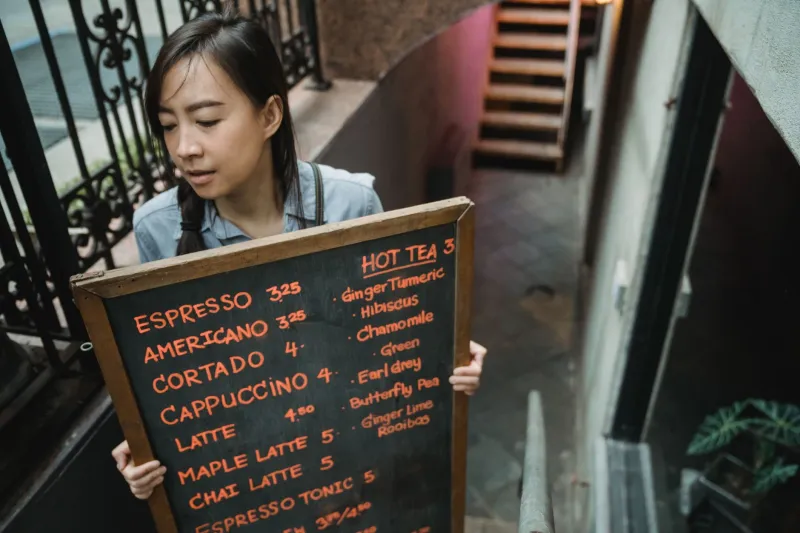
There is a particular kind of British genius that expresses itself in chalk. It appears on A-boards outside cafés, on the back wall of a pub kitchen, on the specials sheet propped beside a sandwich counter. It is not quite poetry and not quite comedy, but it knows exactly what it is doing. On a damp November morning in 2026, the most compelling piece of writing in many town centres is not on a poster or a phone screen. It is a slightly smudged board offering soup, a warning about oat milk, and a rhyme that nobody asked for but everybody reads.
The specials board as serial fiction
A good café chalkboard is not a menu. It is an episode. The soup changes, the joke changes, the tone shifts from cheerful to mildly threatening depending on how the morning has gone. Regulars do not simply order the leek and potato; they check what the board has to say about it. Is the lentil described as ‘hearty’ or ‘suspiciously thick’? Has the coronation chicken been given a backstory? Has the baker added a small, unnecessary couplet about sausage rolls?
This is slow social media, written by hand and erased by close of play. It rewards repetition. A board that once made a passing joke about the weather can return a week later with a callback. A café that names its soups after local streets begins to build a tiny universe. Customers photograph it, not because they have never seen a menu before, but because the menu has developed a personality. In a world of identical laminated lists, that counts for something.
A very British kind of heckle
The other great chalkboard tradition is the passive-aggressive note. Not the furious kind, but the theatrical kind: the sort of message that has been composed after the fourth person has asked for something the café does not do. ‘Yes, we have oat milk. No, it is not free.’ ‘The kitchen closes at 3. Please do not order a full breakfast at 2.58.’ ‘We are not a co-working space. We are a café. The clue is in the name.’
These lines work because they are recognisably human. A printed sign saying the same thing would feel corporate and cold. Chalk makes it a performance. The writer has had a day, and the board is their stage. There is a fine line between charming and rude, and the best cafés know exactly where it sits. They tease the customer and the customer teases back. The board becomes part of the local conversation, a small daily bulletin of what the place is like and who it is for.
The photographed menu
Chalkboards have also become accidental content. A clever specials board gets snapped and posted in local Facebook groups, on Instagram stories, in group chats organising weekend breakfast. ‘Have you seen the board at the place near the station?’ becomes a reason to go. The café does not need a social media manager. It needs someone with neat handwriting, a decent sense of timing and a chalk pen that has not gone blunt.
This is where the ordinary becomes shareable. The board is not trying to go viral. It is trying to get through the lunch rush. But that low-stakes sincerity travels well. People are tired of branded banter. They are less tired of a genuinely funny line about the fact that the flapjacks are made with the last of the golden syrup. The board feels like a dispatch from a real kitchen, not a content calendar.
Why chalk still wins
There is also the matter of effort. Chalk takes time. It smudges. It has to be redone. That visible labour is part of the appeal. A printed sign is an instruction; a chalkboard is a performance. The handwriting wobbles. The spelling may be creative. The layout may collapse halfway down. All of this makes it more interesting, not less.
In 2026, we are surrounded by menus that have been optimised, photographed and uploaded before anyone has tasted the food. The chalkboard sits stubbornly in the other direction. It is temporary, local and slightly imperfect. It gives a café a voice without asking for a follow. It makes the most ordinary transaction — soup, bread, a cup of tea — feel like it belongs to a particular place and a particular person.
Not every board is a masterpiece. Some are just a list of fillings in biro that has been copied out in chalk. But the best ones do something quietly brilliant: they turn the daily special into a reason to leave the house. The soup has feelings. The board knows. And in Britain, that is often enough.