Minutes of the Last Meeting: The People Keeping Britain’s Parish Council Websites Wonderfully Odd
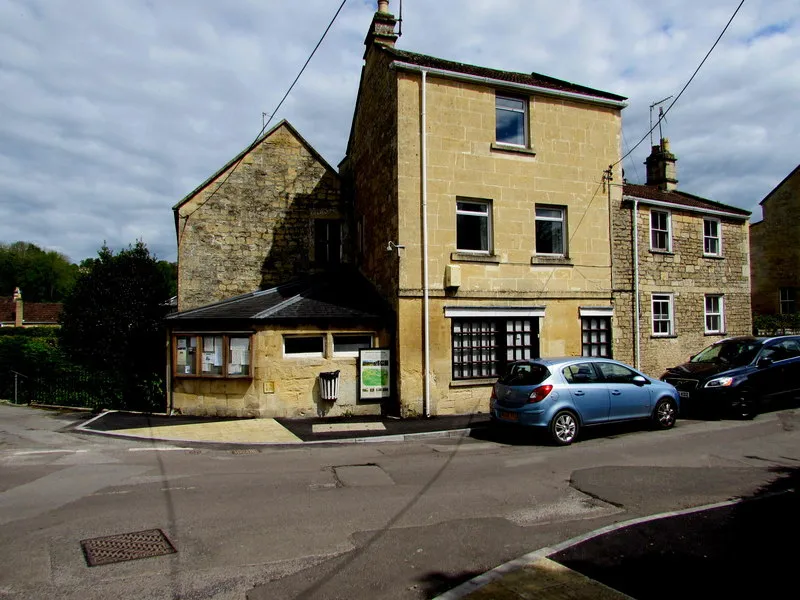
Photo: Jaggery , CC BY-SA 2.0, via Wikimedia Commons
The first thing you notice is the font. The second is that the PDF has not loaded. The third is a photograph of a hanging basket outside the village hall, uploaded in 2019 and never replaced. Welcome to the parish council website: a small, stubborn, gloriously handmade corner of the British internet.
In 2026, when every brand has a design system and every public body is meant to have a ‘digital strategy’, the parish council site remains defiantly itself. It is not trying to be a platform. It is trying to tell you that the allotment committee meets on the second Tuesday of the month, and that the agenda is available to download, and that the download will not work.
I have spent the past few weeks ringing clerks and volunteers who look after these sites. Not to mock the Comic Sans. Not to count the broken links. To ask a simpler question: who keeps this thing going, and what happens if it gets tidied away?
The clerk who does everything
Denise is a part-time clerk for a parish council in Lincolnshire. She is also the website. She updates the meetings page, uploads the minutes, resizes the photographs and once spent an entire evening trying to make a PDF open in a new window. She is not a web designer. She is a person who cares about her village and has a login.
‘I inherited it,’ she says. ‘The previous clerk had built it in something called Joomla. I had never heard of Joomla. I still have not really heard of Joomla. But I can get the minutes up, and that is the main thing.’
Denise’s site has a green header, a rotating banner of village scenes and a section called ‘Useful Contacts’ that has not been updated since a councillor moved to Spain. It also has the most complete record of local decision-making for miles. Planning responses. Speed limits. The saga of the bus shelter. It is messy, but it is alive.
A PDF is a promise
There is a particular poetry to the parish council PDF. It is rarely accessible. It is often scanned at an angle. It sometimes has a filename like ‘minutes_final_2_ACTUAL.pdf’. But it is also a public document in the truest sense: a record that someone showed up, argued about a hedge, and agreed to do something about the pothole.
Alan, a retired IT teacher in Devon, volunteers as webmaster for his local council. He took over after the previous volunteer moved away. He describes his role as ‘part technician, part archaeologist’. The site he maintains has a guestbook from 2004, a page for the village fete that has not been updated since the fete was cancelled, and a link to a weather forecast that now redirects to a car insurance comparison site.
‘I could fix all of it,’ he says. ‘But then I would have to decide what it should look like. And that is not my job. My job is to keep it working.’
That distinction matters. A lot of these sites are not badly designed on purpose. They are designed by accumulation. A template here, a plugin there, a photograph of a councillor added in 2012 and never removed because no one wants to be the person who deletes a face. The result is less a website than a layer cake of local history.
The folk art argument
I am not going to pretend every parish council site is a lost masterpiece. Some are genuinely hard to use. Some are inaccessible. Some have a cookie banner that covers the entire screen and a contact form that emails a clerk who retired two years ago. There are real problems, and they should be fixed.
But there is a difference between fixing a problem and sanding away a personality. The parish council web page is one of the last places online where you can see the hand of a specific person. The font choice is a choice. The slightly wonky photo of the war memorial is a choice. The phrase ‘Minutes of the Last Meeting’ is not SEO copy. It is a civic ritual.
In a world of feeds and algorithms, these sites feel like the last handmade corner of the internet. They are not trying to retain you. They are not A/B testing the wording of ‘Allotments’. They are just there, like a noticeboard outside a village hall, with a laminated sign that says ‘Please do not park on the verge’.
What gets lost when it gets tidy
There is pressure to modernise. Accessibility regulations, GDPR, the endless churn of council templates. These things matter. But every time a parish council site is folded into a centralised platform, something small disappears: the local joke in the page title, the photo of the duck race, the clerk’s slightly apologetic note about the next meeting being moved to the scout hut.
Denise is not sentimental about her site. She would love a better one. But she also knows that the current version does a job no one else is doing. ‘People ring me because they cannot find something on the website,’ she says. ‘Then I send them the PDF. Then they ring me again because they cannot open the PDF. It is a system.’
It is a system. And it is held together by people who are not paid enough, or at all, to be the keepers of a small civic archive. Alan checks his site every morning. Denise updates hers on Sunday evenings. They are not webmasters in the Silicon Valley sense. They are neighbours with logins.
So here is the case for the parish council website as folk art. Not because it is beautiful. Because it is human. Because it records the things that matter to a place: the meeting, the hedge, the pothole, the fete. And because, in 2026, a page that still says ‘Last updated: 14 March 2023’ is a strangely moving thing. It means someone was there. It means someone is still trying.