Top Deck, 3AM: The Night-Bus Archivists Recording Britain While It Sleeps
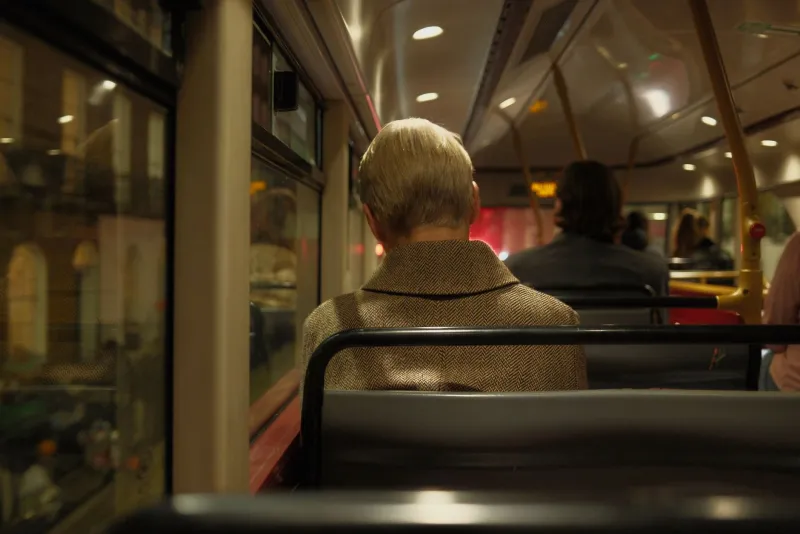
At 3:07am on a Tuesday, the N29 to Enfield is idling outside Trafalgar Square. A man in a high-vis jacket is asleep upright, a woman is eating a bag of crisps with surgical precision, and a teenager is filming the empty street through the window. This is not a scene from a film. It is a scene from a spreadsheet.
For the past two years, a loose network of writers, photographers and self-described 'insomniac passengers' has been documenting Britain's night bus routes. They are not transport nerds. They are archivists of the after-hours. Their work — posted on personal blogs, Instagram accounts and the occasional zine — is part travelogue, part social record. And it is quietly building a portrait of the UK that most of us never see.
The route as a record
'Night buses are the only public spaces left where you can sit and watch a city without buying anything,' says Priya, a 29-year-old photographer from Leeds. She has spent the last 18 months riding the city's night services, photographing passengers who agree to be pictured. Her project, 'After the Last Train', now includes more than 300 images. 'You see the same faces. The care workers finishing a shift. The clubbers going home. The people who just need to be somewhere else. It's like a rolling census.'
In Bristol, a writer called Tom has been keeping a handwritten log of every night bus journey he takes. He records the time, the route, the driver's name (if he catches it), and one observation. 'It started as a way to manage my insomnia,' he says. 'Now it's a habit. I have notebooks going back years.' He is careful to note that he is not trying to romanticise the service. 'It's often cold, it's often late, and the night bus is not a luxury. But it is honest.'
The projects are small, but they find each other. A photographer in Glasgow started a shared map after seeing Priya's work on Instagram. Now there are contributions from Cardiff, Sheffield and Southampton. It is not a formal archive. It is a loose constellation of people who happen to be awake at the same time.
Drivers who know the script
The archivists are not the only ones paying attention. Night bus drivers are, by necessity, experts in the small dramas of the route. 'You learn the regulars,' says Denise, who has driven the N15 out of Romford for six years. 'There's a fella who gets on at 2:15 every morning with a bag of onions. I've never asked. There's a nurse who always says thank you. And there's the people who fall asleep and miss their stop, and you have to wake them up gently.'
Denise has been photographed for one of the projects. She was initially sceptical. 'I thought, why would anyone want to look at a bus? But then I saw the pictures. They made it look like a painting. It made me see my job differently.' She pauses. 'It also made me realise how much I know about the people on my bus. That's not nothing.'
The unwritten etiquette of the top deck
Spend enough time on night buses and you notice the rules. The top deck is for silence, or for the kind of conversation that only happens between strangers at 4am. The lower deck is for the driver's radio and the occasional argument. Nobody sits directly behind the driver unless they have to. The back seat is claimed by whoever gets there first, usually a group of teenagers who will spend the journey talking about someone called 'Kai'.
These are the details the archivists collect. 'I'm not interested in the big story of the night-time economy,' says Priya. 'I'm interested in the fact that the same woman gets on the N29 every Thursday with a rolled-up yoga mat. Or that the driver on the 3:40 to Enfield always plays the same radio station. Those things feel important because they are so ordinary.'
Why it matters after midnight
There is a practical edge to all this. Night bus routes are often the first to be cut when budgets are squeezed, and the people who document them are sometimes the only ones who notice. When a route changes or a stop is moved, the archivists are the ones who can say: this used to be here, and this is who used it.
But there is something else, too. In a country that increasingly fetishises the '24-hour city', the night bus is a reminder that the night is not just a playground. It is a workplace, a commute, a waiting room. It is where the cleaner gets home, where the nurse gets to the ward, where the teenager gets away from a house that is not safe. The night bus is not glamorous. It is necessary. And the people mapping it are making sure we don't forget.
'People think the night bus is sad,' says Tom. 'I think it's the opposite. It's full of people getting on with it. That's not sad. That's Britain.'
At 4:12am, the N29 pulls into Enfield. The man in the high-vis wakes up, checks his phone, and gets off without a word. The teenager stops filming. The driver announces the terminus. For a moment, the bus is empty. Then the next shift begins.