The Hiss Before the Hello: Britain’s Answerphone Tape Archivists
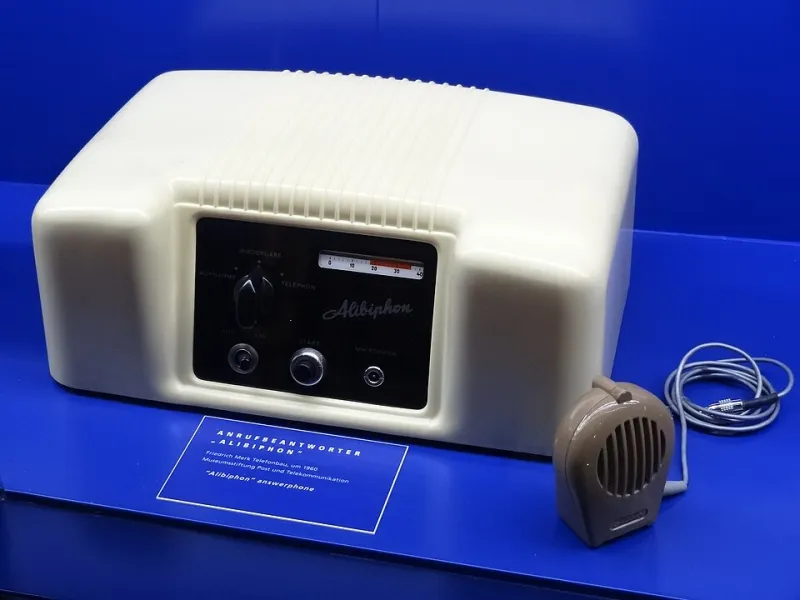
Photo: Cherubino, CC BY-SA 4.0, via Wikimedia Commons
Somewhere in a spare room in Leeds, a cassette is spooling. There is the click of a plastic mechanism, a faint whir, and then that specific, dusty hiss of magnetic tape that has been sitting in a loft since 1994. And then a voice: “Hi, you’ve reached Sue and Dave. We’re not in, obviously. Leave a message after the beep. And don’t forget it’s bin day.”
The message is mundane. The delivery is not. It is a tiny, unintentional radio play about domestic life, complete with a faint EastEnders theme in the background and the clatter of a kettle. And it is exactly the sort of thing a small but determined group of British hobbyists is trying to save before the tape stock turns to dust.
The accidental archive
Answerphone tapes were never meant to be kept. They were the disposable by-product of a landline era: the microcassettes and standard cassettes that sat inside machines made by Panasonic, BT, Philips and a hundred forgotten brands. You recorded your outgoing greeting, you played back messages, and then you taped over it all. The format was designed for erasure.
But in 2026, with almost everything moved to voicemail servers and WhatsApp voice notes, those physical tapes have become something stranger: a found archive of unguarded British speech. Collectors trade them on forums, rescue them from car boot sales and house clearances, and restore them using old decks, audio interfaces and a lot of patience. The best finds end up on YouTube, the Internet Archive and niche Discord servers where people argue about tape head alignment the way others argue about football.
“It’s not nostalgia, exactly,” says one collector, who asked to be described only as a “tape person” from Sheffield. “It’s more that these tapes capture a version of Britain that didn’t know it was being recorded. People are awkward, funny, passive-aggressive, half-asleep. You can’t script that.”
The passive-aggressive beep
The outgoing greetings are the gateway drug. In the 1980s and 1990s, answerphone machines often came with pre-recorded messages delivered in a plummy, slightly disapproving automated voice. BT’s 1571 service — launched in the mid-1990s — had its own clipped cadence, a tone that managed to suggest you were interrupting something important. Mercury Communications had a different flavour. And then there were the homemade greetings: the family who recorded a jingle, the dad who did a mock news bulletin, the teenager who whispered “leave it after the tone, yeah?”
The surrealism is built in. A machine answers the phone, but it speaks in the voice of a stranger. A family leaves a greeting, but they are performing for an audience of none. The result is a kind of accidental comedy that no one was trying to make. One tape in circulation features a man who spends forty-five seconds explaining that he is not in, but that if you are the person from the council, he has already put the bin out. Another includes a nan attempting a birthday rap for her grandson, complete with a beatboxed rhythm that sounds like a lawnmower starting up.
Dead tech, living voices
The deeper appeal, though, is the messages themselves. Unlike letters or emails, answerphone tapes preserve the voice: the hesitation, the sigh, the background noise of a kitchen radio, a dog barking, a child being told to be quiet. They are intimate in a way that feels almost illicit. A wrong-number message from 1998 can be more evocative than a whole album of carefully curated nostalgia.
Collectors are careful about what they share. Most have a personal rule: greetings and automated messages are fair game, but personal messages are either redacted or kept private. Some wait decades before uploading anything. Others strip out surnames and phone numbers. The ethics are murky, and the hobby knows it. Is this preservation or eavesdropping? The answer probably depends on whether the voice belongs to your family or someone else’s.
Why the beep still matters
In 2026, we are surrounded by voice. Voice notes, voice assistants, AI clones that can read your emails in your own cadence. But most of it is frictionless and editable. Answerphone tapes are the opposite. They are physical, finite and stubbornly analogue. They require a machine to play them, and that machine is probably older than the person trying to use it.
That friction is part of the charm. The hiss before the hello is a proof of authenticity, a reminder that the voice on the tape once existed in a room with a carpet and a phone bill. The collectors are not trying to bring back the 1990s. They are trying to stop the 1990s from being erased by the very technology that replaced it.
The future of the hiss
There are practical problems. Tape rot is real. Microcassettes were never built to last. Old decks are getting harder to repair, and the expertise is thinning out. Some collectors are now working with local archives and museums, arguing that answerphone tapes belong alongside oral histories and domestic photography. Others are simply digitising what they can and hoping the files outlive the hardware.
It is slow, unglamorous work. But listen to enough of these tapes and you start to understand the obsession. Britain’s answerphone archive is not a neat collection of important events. It is a mess of birthdays, wrong numbers, passive-aggressive neighbours and half-finished jokes. It is the sound of people not knowing what to say, and saying it anyway. And somewhere in a spare room in Leeds, a cassette is still whirring.