The Six-Listener Rule: Britain’s Allotment Podcasters Are Building a Slower Internet, One Shed at a Time
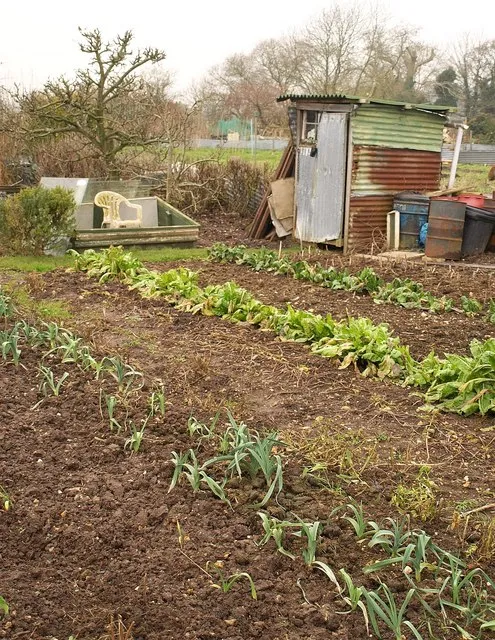
Photo: Derek Harper, CC BY-SA 2.0, via Wikimedia Commons
On a damp Tuesday in Sheffield, the most radical broadcasting studio in Britain is probably a shed with a wonky door, a camping chair and a phone balanced on an upturned flowerpot. There is no producer. There is no brand deal. There is a kettle, a packet of digestives and a man called Colin explaining why his tomatoes failed.
This is shedcasting: a small, stubborn corner of the UK podcasting world where allotment holders record audio for audiences so tiny they can be listed by name. The subjects are not true crime or celebrity interviews. They are tomato blight, manure deliveries, the correct way to decline a courgette, and how to glare at a neighbouring plot without starting a feud that outlasts the growing season.
It should be twee. It is not. At a moment when the internet rewards volume, speed and relentless self-promotion, the shedcasters are doing something quietly awkward: making things for almost nobody, on purpose.
The shed as studio
Most shedcasts are made with the bare minimum. A phone. A free editing app. A theme tune that is either a greenhouse door creaking or a few seconds of a radio played too close to the microphone. Episodes are uploaded when they are uploaded. There is no content calendar, no newsletter funnel and no plea to like and subscribe. If you find one, it is usually because someone on the allotment site sent you a link with the words: 'You might like this. It's just Colin talking about leeks.'
The sound quality is part of the charm. You can hear rain on felt roofs, spades against concrete, a dog barking three plots over. One producer records inside a polytunnel because, he says, 'it makes everything sound like it is happening inside a crisp packet'. He is not wrong.
Colin, Leeds: 'It's not a broadcast, it's a note to the site'
Colin, 58, records The Leek End from a council allotment in Leeds. Episodes run between nine and fourteen minutes. He has made twenty-three of them. His listenership, by his own estimate, is six people: his brother in Wakefield, two plot neighbours, a man in Orkney he has never met, his daughter ('when she remembers') and a retired teacher who emails corrections about Latin plant names.
'I don't promote it,' Colin says. 'If I wanted an audience I'd go on Facebook and argue about parking. I want a shed. I want to sit in it and say what happened this week. If six people hear it, that's six more than I expected.'
His episodes are not tutorials. They are closer to dispatches. In one, he spends four minutes describing a water butt that had developed 'a smell like a wet coat'. In another, he reads out a letter from the council about plot inspections and then sits in silence for eleven seconds. It is oddly compelling. It is also, in its way, a local newspaper for an audience of one street.
Dev, Leicester: seed-swap etiquette as drama
Dev, 34, records Half-Rot from a plot on the edge of Leicester. His show is the most produced of the three, which is to say he sometimes adds a second track of ambient noise. He describes it as 'a podcast about the social rules of growing things, disguised as a podcast about vegetables'.
Recent episodes have covered the etiquette of refusing a seed swap ('you take the seeds, you say thank you, you do not say you have twelve packets of the same thing already'), the correct way to ask for a lend of a strimmer, and what to do when someone leaves a marrow on your bench without a note. The marrow episode runs to eighteen minutes and includes a phone call to his dad in Birmingham, who is baffled by the entire premise.
'Download numbers are a little blue graph that looks like weather,' Dev says. 'I look at it once a month. It doesn't tell me whether the episode was good. A man at the seed swap told me it was good. That's better data.'
He says the appeal is not nostalgia. It is control. 'The rest of the internet is trying to scale me. This is the one place where I am actively trying to stay small. It feels like keeping a gate locked.'
Fiona, Fife: the glare and the weather
Fiona, 47, records The East Wind from a coastal allotment in Fife. Her episodes are short, usually under ten minutes, and often begin with the weather. Not as small talk — as a character. 'The wind today is doing the thing where it comes from three directions at once,' she says in one episode. 'The polytunnel is making a noise like a distant fairground.'
Her signature subject is the allotment glare: the wordless exchange between plot holders when someone's weeds are seeding, or someone has taken a shortcut across a corner, or someone has been seen with a new rotavator and no explanation. 'There is a way of looking at a neighbouring plot that says: I have seen your bindweed and I am not going to mention it,' she says. 'It is a whole language. Nobody teaches it.'
Fiona has six regular listeners. She knows two of them. She has never met the others. She likes that. 'There is no comments section,' she says. 'No one can reply within four seconds. If someone wants to say something, they have to find me at the compost heap. That slows everything down. It's better.'
Why six is a political number
The internet has spent two decades telling us to grow. Grow the audience, grow the brand, grow the engagement. Shedcasting does the opposite. It is not anti-audience; it is anti-optimisation. A podcast with six listeners is not a failed podcast. It is a private garden with a gate left open.
That smallness changes the work. Without a growth target, there is no reason to chase trends or sand off the odd bits. Colin can spend four minutes on a smelly water butt. Dev can interview his dad about a marrow. Fiona can describe wind for a minute and a half. The shows are allowed to be local, slow and slightly unuseful. In 2026, that feels less like a hobby and more like a small act of refusal.
The rules of shedcasting
There are no official rules, but patterns emerge. Record when it rains. Do not add a call to action. End with the kettle. Publish late. If you meet another shedcaster, do not compare download numbers — compare compost. And if you stumble across one of these shows, listen quietly. Do not tell everyone. The six-listener rule works because it stays a little bit hidden.
By November, the allotment sites are going quiet. The leeks are in, the beds are mulched, the sheds are cold. The shedcasters are still recording. Not for you, particularly. Not for the algorithm. For the plot, the week, the six people who know what happened. It is the slowest internet in Britain, and it is still broadcasting.